AFib & Stroke Risk: When Do You Need a Second Opinion?
Atrial fibrillation can raise your stroke risk without obvious symptoms. Based on published research, here's when a cardiology second opinion makes a real difference.
What is atrial fibrillation, and why does it matter?
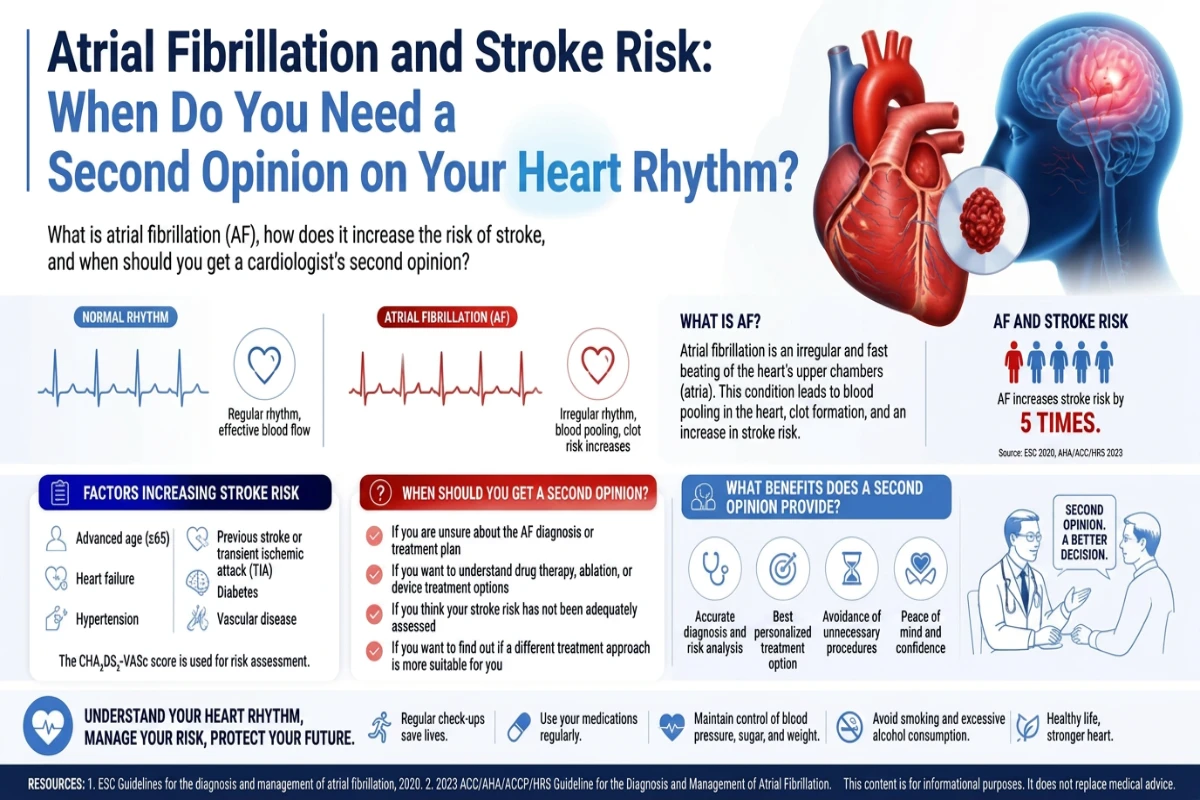
Atrial fibrillation (AFib) is the most common heart rhythm disorder, caused by irregular, rapid contractions of the heart's upper chambers (the atria). Heart palpitations are usually harmless, often triggered by excitement, caffeine, or lack of sleep. But an irregular palpitation that lasts can be a sign of AFib. Its most serious risk is that it can lead to a stroke without warning.
In this article, we look at why AFib needs to be monitored, and when an atrial fibrillation second opinion makes a difference, drawing on the published research of a cardiologist who works in this field, Dr. Lale Dinç Asarcıklı. For patients living in the Netherlands or elsewhere in Europe who want to speak with a Turkish- and English-speaking cardiologist, this is a way to get a clear assessment in your own language.
Stroke risk in AFib: how is a clot in the left atrium detected?
The most serious consequence of AFib is an increased risk of stroke: a clot (thrombus) can form in the left atrial appendage, break loose, and travel to the brain. The most reliable way to visualise this clot is a specialised type of echocardiography performed via the oesophagus (transoesophageal echo).
A study published in 2025 independently validated a scoring system (the CLOTS-AF score) designed to predict a patient's clot risk against real-world patient data; Dr. Dinç Asarcıklı was among the authors of this validation study [1]. Another study from the same year examined how a simple blood-based inflammation marker (the CRP/albumin ratio) could help predict the presence of a clot in patients with atrial fibrillation [2].
Studies like these help answer the question of who is at higher or lower clot risk more precisely; not every AFib patient falls into the same risk category.
Blood thinners in AFib: why medication adherence matters
Once AFib is diagnosed, blood-thinning medication is usually started to prevent stroke. But this treatment only works if the medication is taken consistently and at the correct dose. A study conducted in Turkey found that adherence to newer-generation blood thinners (NOACs) was more variable than expected among patients [3]. Another study of patients on warfarin found that how long blood levels stayed within the therapeutic range (TTR) differed depending on whether patients were followed by the same physician or by rotating physicians [4].
These findings show that AFib treatment isn't just "writing a prescription"; it requires ongoing, consistent follow-up and dose adjustment.
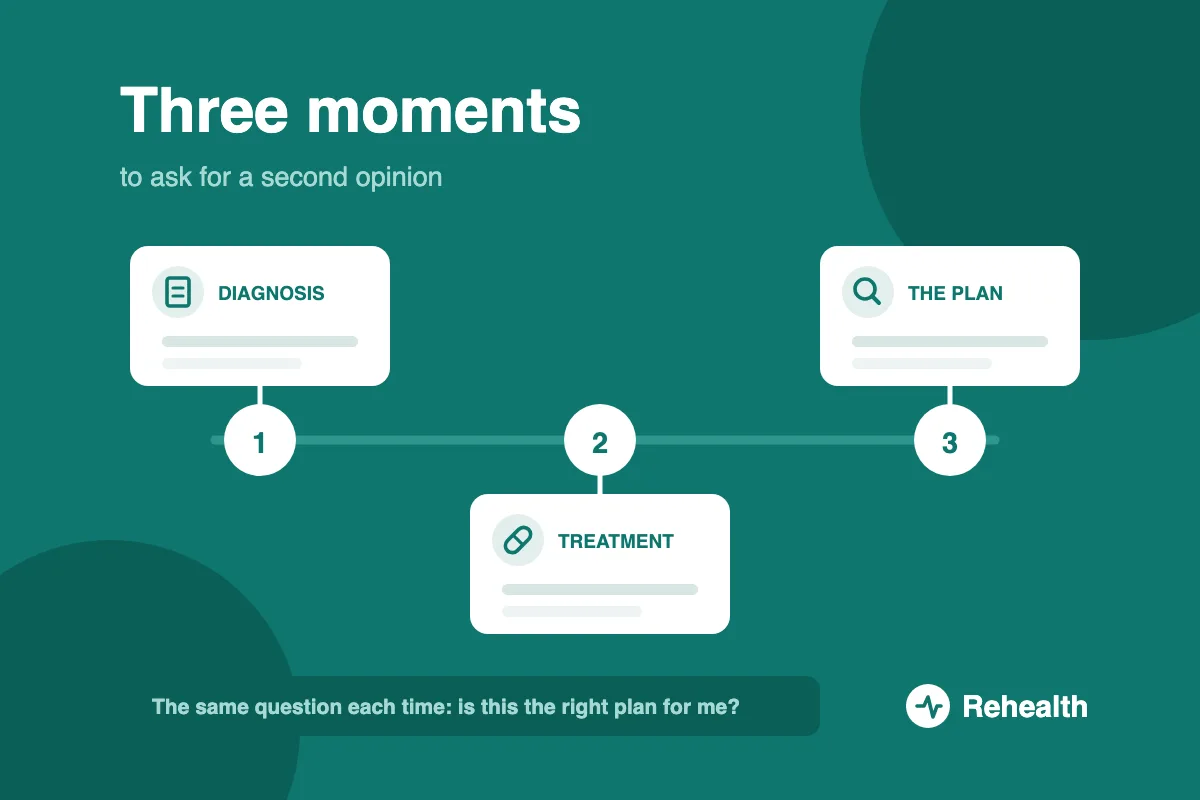
What does an atrial fibrillation second opinion add to diagnosis and treatment planning?
A second medical opinion isn't sought to override your current doctor, but to have the full picture read again through a different lens. In a chronic, multi-dimensional condition like AFib, that difference matters.
Some questions may have gone unasked at the initial diagnosis stage. Is the rhythm disturbance on the ECG genuinely AFib, or another type of supraventricular tachycardia? Is it paroxysmal or persistent AFib? Was the CHA2DS2-VASc score calculated correctly, and was the anticoagulation decision based on it? Were triggering conditions such as thyroid function, sleep apnoea, or hypertension investigated thoroughly enough?
During an online second opinion through Rehealth, the patient shares all available reports (ECG, Holter monitor, echocardiogram, blood tests). A cardiologist actively working in this field compares the existing findings against current guidelines and provides a comprehensive assessment. The process doesn't take long; there's no need to join a waiting list in the Netherlands or Germany, and there's no language barrier.
Sometimes a second opinion simply confirms that treatment is on the right track. That alone has value. Other times, it uncovers a missed risk factor, an inadequate dose, or a patient who was never assessed as a candidate for ablation.
Want an online second opinion for your heart rhythm condition? You can book an appointment through the Rehealth platform and share your reports securely.
Frequently asked questions
I feel palpitations, but my ECG came back normal. Could I still have AFib?
Yes, it's possible. AFib often comes in episodes (paroxysmal AFib), and a single ECG that wasn't taken during an episode can show a normal rhythm. If symptoms persist, a 24-48 hour Holter recording or longer-term rhythm monitoring is recommended.
I've been diagnosed with AFib and I'm already on blood thinners. Do I still need a second opinion?
Being on treatment doesn't mean the plan fully matches current guidelines. A second opinion is a way to independently confirm whether your medication choice and dose fit your risk profile, and whether your CHA2DS2-VASc score was calculated correctly.
My GP (huisarts) in the Netherlands didn't refer me to a cardiologist. What can I do?
No GP referral or waiting list is needed for an online second opinion. You can share your existing ECG, Holter, or echocardiogram results directly and speak with a cardiologist.
Is AFib treatment in Türkiye as reliable as in Europe?
Reliability depends more on the quality of the hospital and physician than on the country of treatment. Working with verified hospitals that have dedicated cardiology programmes narrows that gap. You can find details on network hospitals and cost comparisons on Rehealth's cardiology and heart surgery page.
How can I find out my stroke risk with AFib?
Stroke risk is calculated using a scoring system called CHA2DS2-VASc, which takes into account factors such as age, sex, hypertension, diabetes, heart failure, and a prior history of stroke or transient ischaemic attack. A cardiologist can calculate this score for you based on your existing findings.
Are palpitations always AFib?
No. Most palpitations are harmless, but irregular ones that persist should raise suspicion of AFib. The way to tell the difference is an ECG and clinical assessment.
When is ablation considered for AFib?
Ablation is considered in some patients when symptoms persist despite medication, or when rhythm control is the priority; this decision depends on the patient's age, how long they've had AFib, and any accompanying conditions. Those looking into heart rhythm treatments, including ablation, abroad can arrange a free planning call with the treatment team through Rehealth's cardiology and heart surgery page.
If I'm diagnosed with AFib, do I need surgery right away?
No. Most patients are managed with medication first; ablation or other interventional procedures are considered when medication isn't enough.
References
[1] Kalenderoğlu K, Hayıroğlu Mİ, Dinç Asarcıklı L, et al. External validation of CLOTS-AF score in patients with atrial fibrillation undergoing transesophageal echocardiography. Annals of Medicine, 2025. View on ResearchGate →
[2] Kahraman E, Kalenderoğlu K, Keskin K, et al. Evaluation of the effectiveness of C-reactive protein/albumin ratio on thrombus in patients undergoing transesophageal echo. Biomarkers in Medicine, 2025. View on ResearchGate →
[3] Emren V, Şenöz O, Bilgin M, et al. Drug Adherence in Patients With Nonvalvular Atrial Fibrillation Taking Non-Vitamin K Antagonist Oral Anticoagulants in Turkey: NOAC-TR. Clinical and Applied Thrombosis/Hemostasis, 2018. View on ResearchGate →
[4] Dinç Asarcıklı L, Kafes H, Şen T, et al. Which is the best for the warfarin monitoring: Following up by fixed or variable physician? Northern Clinics of Istanbul, 2022. View on ResearchGate →
You can find Dr. Dinç Asarcıklı's full list of 88 publications on her ResearchGate profile.
This article is for general information only and is not a substitute for personal medical advice. If you have concerns about your heart health, please consult a cardiologist.