Which Medical Records Do You Need for a Second Opinion?
A second doctor asks for four documents. Here is where to request your medical records in each country, and what to leave out.
You already have most of the file
People often postpone a second opinion because they think the paperwork is heavy. It rarely is. Most of the medical records a second doctor needs are already yours. They sit in your drawer or in your hospital app.
A second reading is a reading of documents. No new scan is made. The doctor works with the reports and images you already own. The quality of your file decides the quality of the answer.
In short
| 1 month | the legal deadline for a reply to your request, under GDPR Article 15 [1] |
| €0 | what a first copy of your own records may cost you [1] |
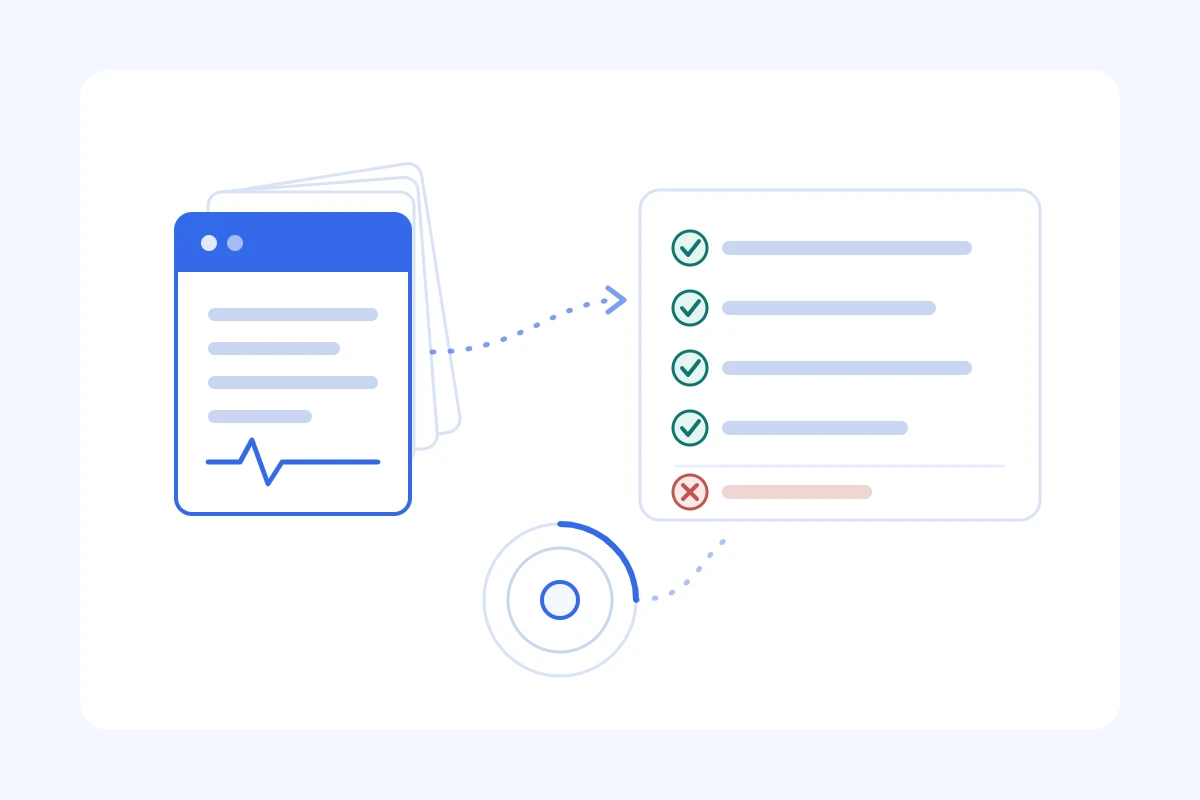
| 4 | documents that cover most cases: report, images, lab results, medication list |
The four documents that cover most cases
Every case differs, and your own doctor may add something. These four are the ones a second doctor asks for almost every time.
- The specialist letter or discharge summary. This is the document that names your diagnosis and the proposed plan. It carries the most weight.
- The imaging itself, not only the report. A radiologist reads pixels, not sentences. Ask for the DICOM files on a disc or through a download link.
- Recent lab results. Blood work from the past few months, with the dates visible.
- Your current medication list. Names and doses. This changes what a doctor can recommend.
Pathology slides are a separate case. If a biopsy was taken, the glass slides stay at the laboratory. Ask for the pathology report first, and ask the lab what it needs if slides have to travel.
Asking for your medical records, wherever they are
One rule covers every country. Ask the institution that created the document.
Your GP holds the GP notes. The hospital holds the operation report and the scan. Nobody holds all of it in one place, so you may need two or three requests.
Across the EU and the UK you have a right of access to your own file. The organisation must answer within one month, and the first copy is free [1]. Put the request in writing so the clock starts on a date you can prove.
Be specific. A request for "my whole file" takes longer. Ask for "the MRI report and images from March 2026" instead.
How that looks in practice
| Where you were treated | Where to start |
|---|---|
| 🇬🇧 United Kingdom | The NHS App shows recent GP records [2]. For hospital records, write to the records department |
| 🇳🇱 Netherlands | Most hospitals have a patient portal. If the document is not there, write to the medical administration |
| 🇧🇪 Belgium | The hospital's own portal, or a written request to the ombudsdienst |
| 🇹🇷 Turkey | Reports are often in the national e-Nabız system. Imaging files usually come from the hospital that made the scan |
| Anywhere else | Write to the hospital or clinic directly and ask for its records procedure |
These are examples, not a full list. The route changes, the principle does not.
Treated in more than one country?
Many people have a file in two places. Records do not move between countries on their own.
Ask in each country separately. Write in the language of that country if you can, because it speeds the answer up.
Outside the EU and the UK the access rules differ, and the hospital sets its own procedure. Older records may simply be gone, because retention periods end and archives are cleared.
If a document no longer exists, say so in the consultation rather than delaying it.
Ask for the images on a disc or a link
This is the step people most often skip. The written report is not the scan. If you send only the report, the second doctor reads someone else's conclusion instead of the original images.
Radiology departments are used to this request. Ask for a CD, a DVD or a secure download link, in DICOM format. Collecting it can take a few days, so ask early.
Our article on a second opinion on your MRI scan explains what a second reading can show. It also says what it cannot.
Keep the file in one place
Once you have collected the documents, they tend to scatter. One is in email, one is on a disc, one is a photo on your phone.
The Rehealth app has a health card for exactly this. Under My Files you upload a report and give it a name. You then tag it as image, report, laboratory, radiology or other. The card also holds your medication, your allergies and your chronic conditions.
From there you can generate one epicrisis. You tick the items you want included and the app builds a single summary you can send on.
That is a convenience, not a requirement. A folder on your laptop works too.
What not to send
A medical file is sensitive data. Two habits cause most of the trouble.
The first is sending records through ordinary email or a messaging app. The second is sending your whole file when three documents would do.
Send what answers the question. Your passport, your insurance number and your address are not part of a medical review. We wrote about this separately in how patient data is protected in medical tourism.
| Send | Leave out |
|---|---|
| Specialist letter or discharge summary | Passport and ID scans |
| Imaging files and the radiology report | Insurance policy numbers |
| Lab results from recent months | Unrelated records from years ago |
| Medication list with doses | Family members' documents |
A file that is not complete is still a file
You do not need everything before you start. Missing a lab result rarely blocks a consultation.
What the doctor needs first is the diagnosis and the proposed plan. The rest can follow. Waiting three weeks for one document while a treatment decision is open helps nobody.
A second opinion starts with what you have. If something essential is missing, the doctor will name it and you can request it then.
Frequently asked questions
Do I need a referral letter for a second opinion?
No. An online second opinion does not run through a referral. You share the documents you already have and you book the consultation yourself.
My hospital wants to charge me for a copy of my file. Is that allowed?
The first copy of your own records is free under GDPR Article 15. A fee may be charged for further copies of the same request. If you are asked to pay for a first copy, point to that article in writing.
How long does it take to get my medical records?
The organisation has one month to answer. In practice a specific request often comes back sooner, and a request for an entire file takes longer.
Can I just send photos of my reports taken with my phone?
For text reports that usually works, as long as every page is readable and the dates are visible. For scans it does not. A photograph of a screen loses the data a radiologist needs.
The hospital that treated me abroad has closed. What now?
Ask your current doctor what is already in your file, because earlier letters are often copied into it. If a document is truly gone, say so at the start of the consultation.
Does the doctor need my whole medical history?
No. The doctor needs what relates to this question. Records from an unrelated treatment years ago rarely help and they widen your privacy exposure.
Sources
[1] Regulation (EU) 2016/679, Article 15: right of access by the data subject. EUR-Lex. Read the regulation →
[2] How to access your health records. NHS. Read the guidance →