Eye Surgery & Vision Correction Abroad
Plan your eye surgery and vision correction abroad with clinical clarity, secure video consultations, and certified experts.
Talk to the eye team before you commit to laser eye surgery.
Thinking about getting rid of your glasses, or comparing what cataract surgery costs? Plan your eye surgery with the team who would actually treat you. You share your prescription, your eye history and any recent measurements. They tell you which method fits your eye, what the risks are, and what happens afterwards. All by video, before you decide anything. Treatment takes place at our verified partner hospitals.
Fill in a short form. The Rehealth team gets back to you on WhatsApp (usually within a few hours in working hours) with your options, prices and next steps.
Prefer to work through it yourself step by step? Create a planning call in the Rehealth app →
Eye surgery abroad at a glance
Starting prices: Laser eye surgery (LASIK) both eyes €1,031 · surface laser (PRK) both eyes €913 · smart lens one eye €1,430 · cataract one eye €913
Most common: Laser vision correction, premium intraocular lens, cataract surgery, phakic lens (ICL), corneal cross-linking
One eye or both: Laser prices are for both eyes. Lens and cataract prices are per eye. Watch for this when you compare
Who qualifies for laser: A prescription that has been stable for a while, a cornea thick enough for the treatment, and no other disease in the eye. The examination makes the call
Age: Laser usually comes up from 18. From the forties near vision enters the picture, so the team will often go through lens options as well
Hospital stay: Laser and most lens procedures are day cases, with no overnight stay
On the NHS: The NHS states that laser eye surgery and lens surgery are usually only available privately
Where: Verified partner hospitals in Turkey: Istanbul, Izmir and Ankara
Pricing: Your package is confirmed in two stages. A starting price here, then an updated package once the eye team has seen your examination and measurements
Before you commit: Free video consultation, no obligation
Two ways to use Rehealth for your eye surgery abroad
Eye surgery is not something you undo. Pick the one that fits where you are in your decision. No off-the-shelf packages, no booking pressure.
💬 Get in touch
For patients researching eye surgery abroad. You want to understand the options and the price ranges. And to be pointed to the right hospital.
How it works
You take the first step in a 30-second form. Write your prescription, your eye history and any recent measurements. Then you speak directly with the eye team.
Start Free — Talk to Us →🩺 Paid second opinion
For patients who want a licensed ophthalmologist to read their file. The doctor reviews your prescription, your measurements and any earlier reports. Then explains the options and which method fits.
When it makes sense
If you are stuck between laser and a lens, if somewhere has told you that you are not suitable, or if you simply want a second view.
Request a second opinion →Eye and Vision Correction Procedures Available Abroad
Our network covers everything from vision correction to retinal surgery. Patients usually come to us for one of three reasons. They want to stop depending on glasses or contact lenses. They have a cataract and their sight has gone cloudy. Or they are facing a long wait at home. Every case is assessed against your prescription, your corneal measurements and the general state of your eye. The team is also honest about who should look at something else first. The figures below are starting prices, not quotes.
Laser Eye Surgery (LASIK)
from €1,031 (both eyes)
The cornea is reshaped with a laser to correct myopia, hyperopia and astigmatism. Done as a day case, with no overnight stay. Whether it suits you is decided by corneal thickness and a full eye examination.
Surface Laser (PRK)
from €913 (both eyes)
The laser works on the surface of the cornea. It comes up when the cornea is thin or LASIK is not suitable. Also a day case. Healing takes a little longer than after LASIK.
SMILE (Small Incision Lenticule Extraction)
Ask us for the price
A keyhole laser technique. A thin lenticule of tissue is taken out of the cornea through an incision of a few millimetres, so no flap is created. Used for myopia and astigmatism. Done as a day case. Whether it suits your eye, and what it costs, is confirmed after the examination.
Lens Replacement Surgery (Premium Intraocular Lens)
from €1,430 (one eye)
Also called lens replacement surgery or refractive lens exchange. The eye's own lens is replaced with an artificial one. Multifocal, trifocal and EDOF options are available. The aim is better visual quality and less dependence on glasses. Price depends on the lens type.
Cataract Surgery (Monofocal Lens)
from €913 (one eye)
A cataract is the clouding of the eye's natural lens. It causes blurred vision, glare and trouble seeing at night. The clouded lens is removed and an intraocular lens takes its place, through a small incision.
Phakic Intraocular Lens (ICL)
from €5,946 (both eyes)
The eye keeps its own lens and a thin lens is placed in front of it. It comes up in high prescriptions and in eyes where laser is not an option. Suitability is assessed with anterior chamber depth and eye measurements.
Corneal Cross-linking
from €1,746 (one eye)
A treatment that strengthens the cornea. It is done to slow the progression of keratoconus. The aim is to hold the current situation, not to restore vision that has been lost.
Strabismus Surgery
from €2,581 (one eye)
The position or tension of the eye muscles is adjusted to improve alignment. It comes up with double vision, an abnormal head position, or reduced visual development in children.
Glaucoma Surgery (Trabeculectomy)
from €3,567 (one eye)
Done when eye pressure cannot be brought down enough with drops or laser. The aim is to lower the pressure and slow damage to the optic nerve. Glaucoma surgery preserves the vision you have, it does not bring back vision already lost.
Vitrectomy (Retinal Surgery)
from €4,962 (one eye)
The gel inside the eye is removed so the surgeon can reach the retina. Used in retinal detachment, vitreous haemorrhage, macular hole and some diabetic retinal problems. Sudden vision loss, flashes and floaters can be signs of these.
Corneal Transplant (Keratoplasty)
from €6,550 (one eye)
Damaged corneal tissue is replaced with healthy donor tissue. It comes up in advanced keratoconus, corneal scarring and some corneal diseases. Full-thickness and partial-thickness techniques are both used.
💡 These are starting prices across our network. Laser prices are for both eyes, lens and cataract prices are per eye. Your own figure depends on your prescription, the lens type chosen and the state of your eye. Our partner hospital requires that no final price is given before a doctor has assessed you. Book a free planning call for a case-specific quote.
How much does laser eye surgery cost abroad, and why is it cheaper?
Vision correction in our network costs considerably less than the same treatment done privately in the UK, the Netherlands or Germany. The same international clinical standards apply. Three things make the difference: lower operating costs, high case volumes and the exchange rate. In laser the gap is especially visible. There is another reason for that. Laser vision correction sits outside insurance in most countries anyway, so the figure you compare is money out of your own pocket on both sides.
| Procedure | Our network | 🇬🇧 UK private | 🇳🇱 Netherlands | 🇩🇪 Germany | Saving |
|---|---|---|---|---|---|
| Laser eye surgery (LASIK), both eyes | from €1,031 | £2,600-6,000 | €1,500-5,000 | €2,000-6,000 | Save up to 80% |
| Surface laser (PRK), both eyes | from €913 | £2,600-6,000 | €1,500-5,000 | €2,000-6,000 | Save up to 80% |
The comparison figures are indicative averages for adults paying privately. They vary with the prescription, the method and the clinic. For smart lenses and cataract the picture is different. There the gap is narrower. And when cataract surgery is medically indicated it is covered by insurance in many countries. Ask your own insurer what your policy covers before you book anything. Spain and the Czech Republic come up in the same searches and are real alternatives, so compare more than one destination.
Your package is confirmed in two stages
Yes, we work with packages. Just not in one go.
Eye surgery abroad is mostly sold as a ready-made all-inclusive package. One price covering the treatment, the hotel, the transfers and the checks. The problem is that this price is set before anyone has read your file. It is built for an average patient rather than for you. In eyes the differences between patients are large. An eye with a low prescription and a thick cornea is not the same operation as an eye with keratoconus. They should not cost the same either.
We work the other way round. You share your details, we pass them to our partner hospitals, and the hospital prices your case. What that offer covers is your call: the surgery only, or the surgery with accommodation and airport transfers. That is still a package. The difference is that it is built around what you asked for, instead of being fixed in advance for everyone.
Our partner hospital also has a binding condition. No final price is given before a doctor has assessed you. That is why the figures on this page are written as starting prices. Nobody can give you a firm number before an examination and eye measurements.
Who can have laser eye surgery, and who cannot?
This is the question people type first. The criteria below are the ones eye teams actually use. None of them decides on its own, the examination gives the real answer.
| Question | General criterion |
|---|---|
| Does my prescription have to be stable? | Yes. If it has not changed for a while, laser comes into play. If it is still moving, you are usually asked to wait |
| Why does corneal thickness matter? | The laser reshapes the cornea by removing tissue. If the cornea is thin, surface laser (PRK) or lens options are discussed instead of LASIK |
| Is there an age limit? | Laser usually comes up from 18. From the forties near vision enters the picture, so the team will often go through lens options as well |
| I have keratoconus, can I have laser? | Thinning the cornea is not suitable in keratoconus. Corneal cross-linking or lens options are assessed instead |
| What if I have another eye condition? | Glaucoma, significant dry eye and some retinal conditions are assessed separately. In those cases that condition is discussed first |
| Pregnancy and breastfeeding? | Prescriptions can shift during this period, so treatment is usually postponed |
| Who makes the final call? | The eye team. No clinic can give you a definite answer without corneal topography, a dry eye assessment and a full examination |
These are general criteria for planning, not a decision about your case. If a clinic accepts you without seeing your corneal measurements, treat that as a warning sign. In our network the video consultation happens before you commit to anything, and the team can still tell you that another route fits you better.
Laser or lens replacement: which one fits which eye?
Laser corrects myopia, hyperopia and astigmatism by reshaping the cornea. Astigmatism is treated in the same session, it is not a separate operation. They do not do the same job. Laser changes the shape of the cornea. A smart lens takes out the eye's own lens and puts an artificial one in its place. Which one suits you is decided by your prescription, the thickness of your cornea and your age.
The general pattern is this. If your prescription is within the range for laser and the cornea is thick enough, laser is the first option. If the prescription is very high or the cornea is thin, lens options come forward. From the forties near vision enters the picture too, so smart lenses get discussed more often.
A smart lens has downsides, and you should know them in advance. Halos and glare at night can occur. The brain needs an adjustment period to get used to the new lens. Once a lens is in, taking it back out is not straightforward. And the price varies considerably with the lens type. Ask about all four in the planning call.
A phakic lens (ICL) is the third route. Here the eye keeps its own lens and a thin lens is placed in front of it. It comes up in high prescriptions and in eyes where laser is not an option.
Cataract surgery is a different job from vision correction
A cataract is the clouding of the eye's natural lens. It blurs vision, causes glare and makes seeing at night harder. Surgery means removing the clouded lens and replacing it with an intraocular lens.
The real decision here is the lens. A monofocal lens focuses at one distance, and most patients use glasses for near work afterwards. Multifocal, trifocal and EDOF lenses give a wider range, and in return side effects such as night glare can come up. That is also where the price difference comes from.
One point deserves saying plainly. When cataract surgery is medically indicated it is covered by insurance in many countries. So the right question for you may not be where it is cheapest, but what your own insurer covers and how long the wait is. Ask before you book anything. Our network makes sense for people paying privately or facing a long wait.
Is eye surgery abroad safe, and what are the risks?
Eye surgery carries risk wherever it is done. We are not going to put a success rate on this page, because what decides the outcome is your eye.
With laser, what gets discussed most: dry eye, halos and glare at night, under- or over-correction, and in some cases a need for further treatment. Most settle with time, but not all.
On the lens and cataract side: infection, changes in eye pressure, clouding of the back capsule over time, and with multifocal lenses night glare and an adjustment period.
The real risks in medical tourism are different. They come from booking through unverified channels, from packages that hide who is actually operating on you, and from follow-up that is left to chance. Our network has three layers. Every hospital and eye team is reviewed by our medical advisory board before joining. The planning call lets you speak to the team before you decide. And your follow-up plan comes home with you in writing.
Your follow-up can happen at home. The critical part of eye surgery is the drop schedule and the checks in the first weeks. The team gives you your discharge summary, the details of the lens used and the drop protocol in writing. Share them with your eye doctor at home, so that if anything goes wrong they have the full records.
How does recovery go, and when can I fly?
Two things get mixed up constantly: the procedure itself and the recovery. Laser and most lens procedures are day cases, with no overnight stay. But the eye settling down takes weeks.
After laser, blurring, light sensitivity and watering are normal in the first days. With surface laser (PRK) that period runs longer than after LASIK. After a lens or cataract procedure vision clears gradually too.
The eye team makes the call on flying. The general approach is to clear you after the first check on site. So settle your travel plan in the planning call before you book the return flight. Ask for the drop schedule and the check-up calendar in writing at the same time.
One thing not to skip: not rubbing your eye, staying out of pools and the sea for a while, and not missing drops all affect the result directly. Follow the written protocol the team gives you.
💬 Curious about your price?
See what your eye surgery would cost, straight from the hospital.
Start Free — Talk to Us →Why Rehealth for eye surgery abroad?
We are not a booking site. We put you in front of the team who would operate on you, before you decide.
Speak to the eye team directly
In the planning call you speak with the hospital's eye team. The people answering your questions are the people who would operate on you.
Free before you commit
The video consultation is free and carries no obligation. The team can also tell you that another route fits you better.
Advisory-board verified
Every hospital and eye team is reviewed by our medical advisory board before joining the network.
Coordinated with your doctor at home
The discharge summary, the lens details and the drop protocol are given in writing and shared with your eye doctor at home.
Data protection (GDPR)
Your eye measurements and reports stay confidential. They are encrypted and handled under European healthcare regulations.
A real person
Not a foreign call centre. Reach us by phone, WhatsApp or email. The same team before, during and after the trip.
Our partner eye hospitals across our European network
This is where your eye surgery actually takes place. Our network currently covers Turkey, in Istanbul, Izmir and Ankara, with conversations underway to add partners in more countries. On insurance: laser vision correction sits outside cover in most countries, while cataract surgery can be covered when it is medically indicated. Ask your insurer in writing before you travel, and ask separately whether your travel policy covers complications of planned surgery. Most exclude them. Every partner is selected for its surgical credentials, the equipment in its eye unit and its follow-up arrangements.
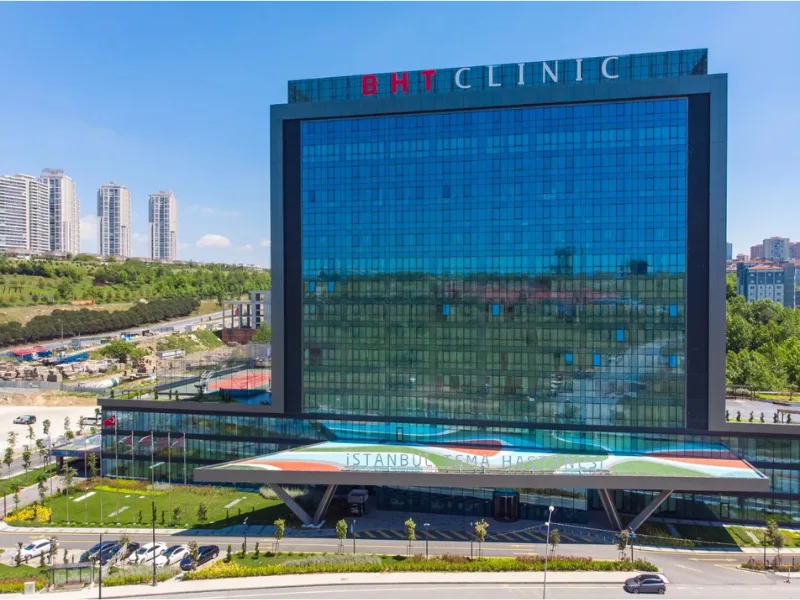

BHT Clinic Istanbul Tema Hospital
📍 Istanbul, Turkey
A general hospital with its own ophthalmology department. Laser vision correction, intraocular lens and cataract surgery, retinal surgery, corneal transplantation, strabismus and glaucoma surgery are all done here. The starting prices on this page come from this hospital's own list.
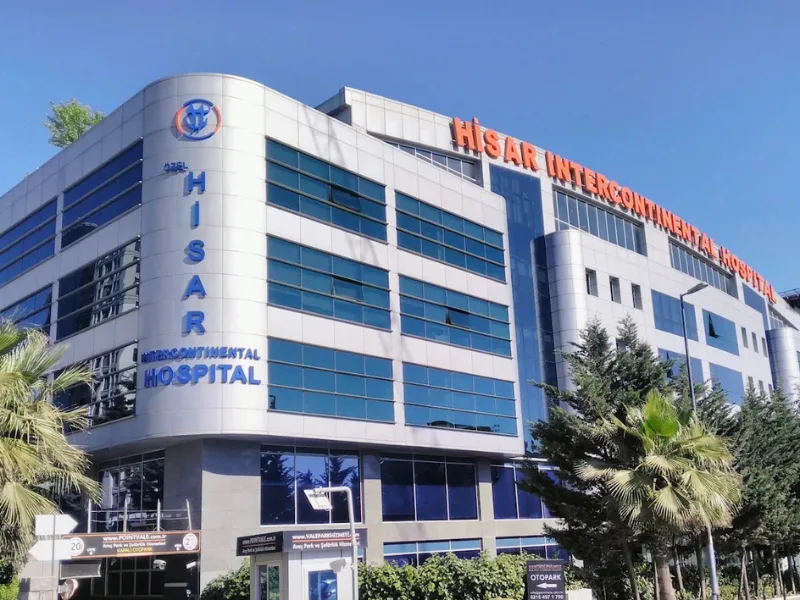

Hisar Hospital Intercontinental
📍 Istanbul, Turkey
An established hospital with an ophthalmology department. Vision correction, cataract and intraocular lens procedures are covered. What fits your own case can be discussed with the team on the planning call.


Gazi Hospital International
📍 Izmir, Turkey
A partner hospital with its own ophthalmology team, working across vision correction and cataract. Which procedure fits your eye becomes clear after the examination.
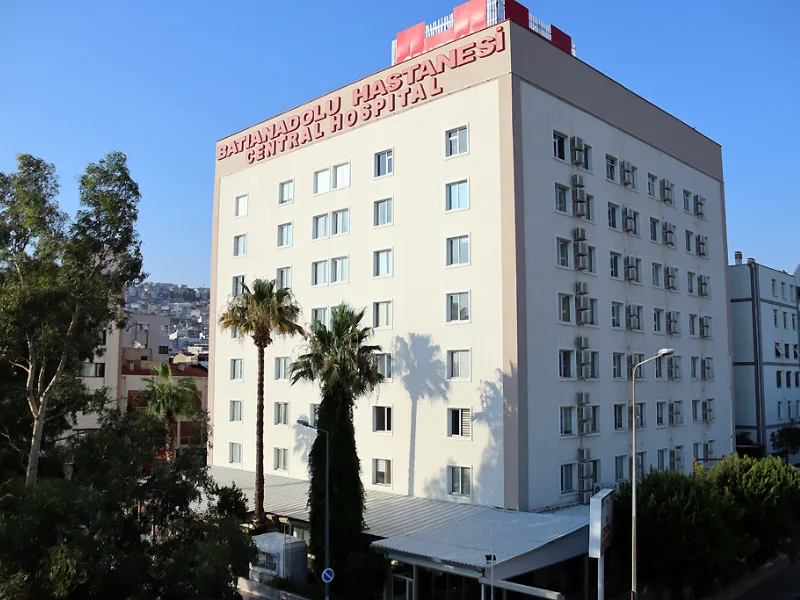
Central Hospital
📍 Izmir, Turkey
A partner hospital with an eye unit. Vision correction and cataract procedures are in scope. The details are discussed with the team on the planning call.


Ankara International Hospital
📍 Ankara, Turkey
A partner hospital in the capital with an ophthalmology department. The route that fits your case can be discussed with the eye team on the call.
More eye partners are joining the network.
Your eye care journey abroad, step by step
Six steps from form to follow-up. No payment upfront at any of them.
Share your details
In a 30-second form you write your prescription, your eye history and what you are looking for.
Choose a hospital
Browse the eye hospitals in our network. Each team's experience and equipment is discussed in the planning call.
Upload your records
A recent eye examination, your prescription and corneal topography if you have them. The team reviews these before the call.
Talk on video
The eye team goes through your prescription, your measurements and your expectations with you. You discuss the recommended method, the risks and a transparent cost breakdown.
Plan your trip
When you are ready, the hospital coordinator helps you plan the journey, including accommodation and airport pick-up.
Surgery and checks
The first check happens on site after surgery. The drop protocol and check-up calendar are given in writing and shared with your doctor at home.
👁️ Which method fits your eye?
Let the eye team look at your measurements and tell you.
Start Free — Talk to Us →What to expect during your eye surgery trip abroad
How long you stay abroad depends on the procedure. Laser and most lens procedures are day cases, but you stay on for the first check. Settle the exact plan in the planning call before you book flights.
Arrival and examination
You meet the eye team in person. A full examination, prescription measurement and corneal topography are done. The method is confirmed here.
The day of the procedure
Laser usually takes a few minutes, under drop anaesthesia. Lens and cataract procedures are also done as day cases.
The first 24 hours
Blurring, watering and light sensitivity are normal. A check is done the next day and the drop schedule is explained.
Before you travel back
The team confirms you are fit to fly. Your discharge summary, lens details and drop protocol are given in writing.
At home
Follow-up continues with your own eye doctor. For questions you can reach the operating team through the app.
The length of the procedure is not the length of the recovery. Laser can take a few minutes, but the eye settling down takes weeks. Plan your travel around that.
Reviews from patients in our eye network
The reviews here are sample text. They will be replaced with real patient reviews before publication.
Frequently asked questions about eye surgery abroad
How much does laser eye surgery cost abroad?
In our network laser eye surgery (LASIK) starts at €1,031 for both eyes, and surface laser (PRK) at €913 for both eyes. Privately in Western Europe the same treatment usually runs between €1,500 and €6,000 for both eyes. These are starting prices, not quotes. Your own figure depends on your prescription and the state of your eyes.
Is laser eye surgery cheaper abroad?
For laser, yes, and the gap is large. There are two reasons worth knowing. Lower operating costs and high case volumes explain part of it. The other part is that laser vision correction is outside insurance in most countries anyway. So the figure you compare is money out of your own pocket on both sides. For cataract the picture is different, because cataract is often covered at home when it is medically indicated.
Is this price for one eye or both eyes?
Laser prices are for both eyes. Smart lens, cataract and most surgical procedures are priced per eye. Always ask which one a clinic is quoting, because some publish a per-eye figure without saying so.
Can laser eye surgery correct astigmatism?
Yes. Astigmatism is corrected in the same laser session as short- or long-sightedness, it is not a separate operation. How much can be corrected depends on the degree of astigmatism and on your corneal thickness. If the cornea is too thin for the correction needed, a toric lens is the route that gets discussed instead.
Do you offer SMILE?
Yes, SMILE is available through our partner network. It is not on the published starting-price list, so the price for your case is confirmed after the examination. Which method fits your eye is decided by your corneal thickness and your measurements, not by the name of the technique. Ask the team to explain why they recommend one over another.
Am I suitable for laser eye surgery?
Three things are looked at in general. Your prescription should have been stable for a while, the cornea needs to be thick enough, and there should be no other disease in the eye. Laser usually comes up from the age of 18. The real answer comes from corneal topography and a full examination. Be careful with any clinic that accepts you without seeing your measurements.
Can I have laser after 40?
You can, but the picture changes. From the forties near vision comes into play and laser alone does not solve that. In this age group the team will usually talk through lens options as well. The examination decides which one fits.
Smart lens or laser, which is better?
They do different jobs. Laser reshapes the cornea, a smart lens replaces the lens inside the eye. If your prescription is within the range for laser and the cornea is thick enough, laser is the first option. If the prescription is very high, the cornea is thin, or near vision is also a problem, lens options come forward.
What are the downsides of a smart lens?
Halos and glare at night can occur. The brain needs an adjustment period to get used to the new lens. Once a lens is in, taking it back out is not straightforward. And the price varies considerably with the lens type. Ask about all four in the planning call.
How much is cataract surgery, and does my insurance cover it?
In our network cataract surgery with a monofocal lens starts at €913 per eye. Choosing a premium lens raises the figure. When cataract surgery is medically indicated it is covered by insurance in many countries. So your first question is what your own policy covers and how long the wait is. Our network makes sense for people paying privately or facing a long wait.
My prescription is too high for laser. What else is there?
A phakic intraocular lens (ICL). The eye keeps its own lens and a thin lens is placed in front of it. In our network it starts at €5,946 for both eyes. Suitability is assessed with anterior chamber depth and eye measurements.
I have keratoconus. What can be done?
Thinning the cornea with a laser is not suitable in keratoconus. Corneal cross-linking is what comes up instead, starting at €1,746 per eye in our network. The aim is to slow progression. In advanced cases a corneal transplant is discussed. Corneal measurements decide which applies.
Do you also do glaucoma, strabismus and retinal surgery?
Yes, and the prices below are per eye. Glaucoma surgery (trabeculectomy) starts at €3,567. Strabismus surgery at €2,581. Vitrectomy at €4,962 and a corneal transplant at €6,550. These are medically indicated operations rather than vision correction, and each needs its own assessment.
Is eye surgery abroad safe?
Eye surgery carries risk wherever it is done, and we are not going to promise you a success rate. With laser, dry eye, night glare and in some cases a need for further treatment are what get discussed. On the lens side it is infection and the adjustment period. The real risk in medical tourism is different: booking through unverified channels and packages that hide who is actually operating on you. In our network every hospital and eye team is reviewed by our medical advisory board, and the planning call happens before you decide.
When can I fly after surgery?
The eye team makes that call. The general approach is to clear you for flying after the first check on site. So do not book a return flight before the planning call. That is where the plan is settled.
Can my follow-up happen at home?
Yes, and the plan is built for that. Your discharge summary, the details of the lens used and the drop protocol are given to you in writing. Share them with your eye doctor at home so follow-up continues there. If something goes wrong, your doctor has the full records.
What is the difference between the free planning call and the paid second opinion?
The free planning call connects you with the hospital's eye team. You discuss the recommended method, the expected process, the cost and travel logistics. It is not a formal medical consultation. A paid second opinion connects you with a licensed ophthalmologist. They review your prescription, your measurements and any earlier reports. You then get a structured written medical view on which method fits.
What is included in the price?
The planning call covers the payment options and what the quoted price includes. Examination, surgery, the lens used, the first checks and the drops. Accommodation and airport transfers go in if you want them. Our partner hospital requires that no final price is given before a doctor has assessed you.
Medical sources
The general medical information on this page follows the patient guidance published by the NHS. Prices come from our partner hospital's own price list and are starting figures. Where these sources publish no number, such as how much vision an individual patient will gain, we do not quote one.
Reviewed for accuracy against current eye surgery practice in our partner network.
Three ways to reach us
Share a few details and the Rehealth eye team will get in touch on WhatsApp. You get your options, prices and next steps.