Second Opinion on a PET-CT Scan: You Already Have the Images
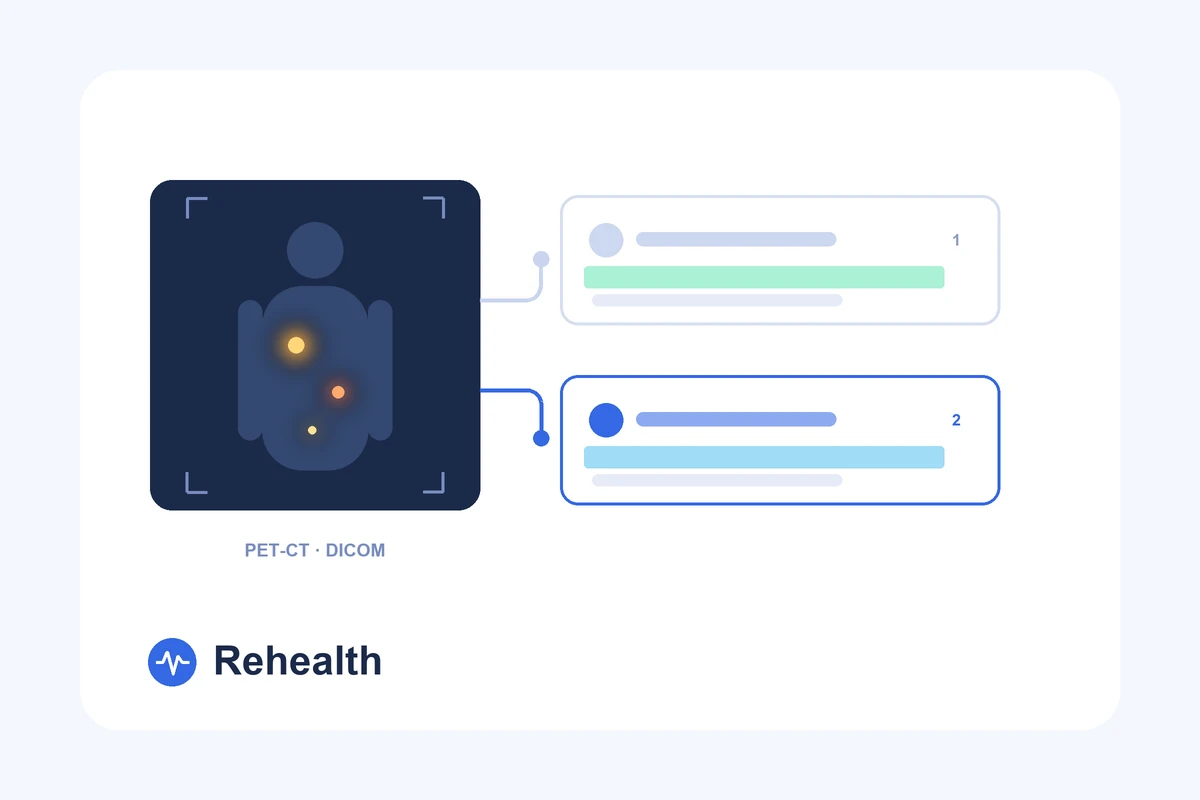
A second opinion on a PET-CT does not mean a new scan. The images you already have can be read again, by a second specialist.
Your PET-CT results are in. Nobody has really explained them.
The PET-CT is done. The report says things like "FDG uptake" or "SUVmax 8.2". The images sit on a disc or in a hospital portal. The next appointment is weeks away.
Many people think a second opinion means a new PET-CT. It does not. The images you already have can be read a second time, by a second specialist.
In short
| 36% | of outside PET-CT reports were staged differently when a specialist read them again (lymphoma, 72 scans) [1] |
| 25%+ | of PET-CT scans in cancer patients showed uptake that was not cancer, mostly inflammation [2] |
| 0 | new PET-CT scans you need for a second reading |
Want your PET-CT read by a second specialist?
No new scan needed. Send the report and the images, and talk to an oncologist by video.
Does every bright spot on a PET scan mean cancer?
No. The tracer used in most PET-CT scans (FDG) is a form of sugar. Cells that use a lot of sugar light up on the scan. Cancer cells do this, but so can a healing wound or an infection [3].
When the PET-CT reports of cancer patients were reviewed one by one over six months, more than a quarter of the scans showed uptake that was not cancer. In half of those, the uptake was as intense as in cancer. 73% of the non-cancer uptake was caused by inflammation [2].
So "there is uptake" is not a diagnosis on its own. The doctor reading the scan looks at where the spot is, its shape, the CT images and your history together.
What does an SUV max of 8 mean? Is there a dangerous number?
SUV is a number that shows how much tracer an area has taken up. There is no single cut-off above which a spot is cancer.
The number can change with the scanner, the way the images are reconstructed, the time between injection and scan, and your blood sugar. That is why the European Association of Nuclear Medicine asks for scans to be done in a standard way [3].
For repeat scans in the same patient, the guideline asks for the same conditions, so the results can be compared [3]. Bring your earlier PET-CT scans too. The doctor will look at how the same area has changed.
Can PET scan results be wrong? How often does a second reading change something?
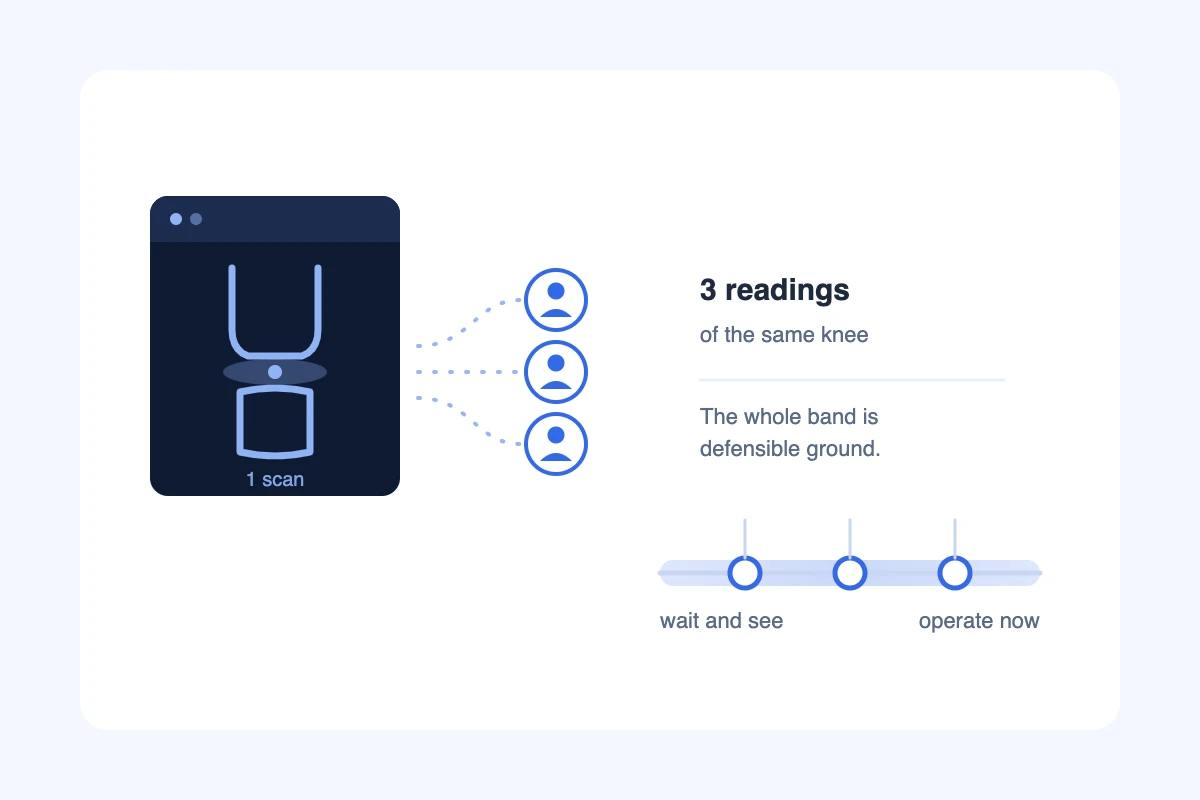
Reading a PET-CT is interpretation, and two specialists can read the same images differently [1].
At Memorial Sloan Kettering in New York, 72 lymphoma PET-CT scans done at other centres were read again by specialist radiologists. In 26 of them, or 36%, the stage was different from the outside report. The specialist reading matched the final stage, set with all of the patient's information, in 78% of cases. The outside reports matched in 55% [1].
Read these numbers with care. The study covered one disease, at a specialist centre. It is not the error rate of your hospital. What it shows is that a second reading of a PET-CT is not an empty exercise.
Asking for a second reading is not a complaint about your doctor
In the same study, most reports kept the same stage on a second reading [1]. If the second reading confirms the first, that is an answer too. You start treatment knowing the plan held up when someone else looked at it.
You do not need a new PET-CT
What a second reading needs, you probably already have:
- The images themselves (DICOM files), not only the report. You can ask for them on a disc or through the hospital portal.
- The PET-CT report.
- Earlier PET-CT scans and other imaging, if you have them, so the doctor can see the change over time.
- The pathology report and your treatment dates (chemotherapy, surgery, radiotherapy). An area seen after treatment may be scar tissue rather than cancer [5].
How to get your PET-CT images and report
The hospital keeps the images, but the information is about you. In the European Union you have the right to a copy of your own health data [6].
Ask the hospital's nuclear medicine or radiology department, or the medical records office. If the patient portal only shows the written report, ask for the images (DICOM) separately.
The scan is done. The reading can be done again.
Send your report and images and talk to an oncologist online. From €50.
How long do PET scan results take?
The NHS says it usually takes 1 or 2 weeks to get PET scan results [4]. If you have not heard anything after a couple of weeks, contact the doctor who arranged the scan [5].
Once you have the report, you do not have to wait for your next appointment to understand it. You can ask a specialist now.
How it works at Rehealth
Whatever you write to us about cancer, the first answer comes from Dr. Fikret Asarcıklı. Not a coordinator and not a sales desk. And this first conversation is free.
To start it, message us on WhatsApp or fill in the short form on our oncology page. Dr. Fikret gets back to you himself.
He collects your information and tells you what you need: a medical second opinion, or a free consultation about treatment in Türkiye. He arranges it, and tells you which documents are needed and how to get them. No medical advice is given in this first conversation.
Want to talk about treatment options in Türkiye straight away? That is free too. See our oncology and cancer care page, or reach us on WhatsApp or in the app.
Only want a medical second opinion on your PET-CT, directly from a doctor? That is the paid part. When the case is in Dr. Fikret's own field, paediatric haematology and oncology, he gives the opinion himself for a fixed €50. Other oncologists set their own fee, and you see it in the app before you book.
You upload your reports in the app. Image files are large, so our team will tell you a secure way to share them. The oncologist reads the images and the report before the call, so the time goes to your questions. The consultation is held in the language your doctor speaks, and you see each doctor's languages in the app before you book. Afterwards you download the opinion as a PDF report to share with your own team. If you later take a treatment package at that hospital, the second-opinion fee is refunded.
All of this works the same for a parent or partner. If you live far away, you can join the video call together.
Frequently asked questions
Do I need a new PET-CT for a second opinion?
No. A second reading uses the images you already have. A new scan is only needed if the doctor says the existing images are too old or cannot answer the question.
Is the report enough, or are the images needed too?
The images matter most. The report is one doctor's reading. Without the images, a second doctor can only comment on someone else's words.
My SUV went up or down since the last scan. What does that mean?
On its own, not much. A change is read together with your treatment, the scan conditions and where the uptake is [3]. That is the doctor's job, so bring both reports.
Can I ask for a second opinion for my mother or father?
Yes. With the patient's permission, you can send their reports. If you live far away, you can join the video call together.
Can a PET scan miss cancer?
It can. How strongly a tumour takes up FDG depends on the type of tumour, and high blood sugar can make the scan less sensitive [3]. That is why a PET-CT is read together with the CT images, the pathology and your history. It is a good question to bring to the doctor reading your scan.
What do I get at the end of the call?
What the images show, what it means for you, and whether anything else needs to be looked at. You download it as a PDF report.
Not sure your PET-CT needs a second reading?
Send us a short message. We will tell you plainly whether a second reading makes sense for you.
Also read: How to ask for a second opinion on a cancer diagnosis · Second opinion on an MRI · Oncology and cancer care
References
[1] Sawan P, Rebeiz K, Schöder H, Batlevi C, Moskowitz A, Ulaner GA, Dunphy M, Mannelli L. Specialized second-opinion radiology review of PET/CT examinations for patients with diffuse large B-cell lymphoma impacts patient care and management. Medicine (Baltimore), 2017;96(51):e9411. Read the study →
[2] Metser U, Even-Sapir E. Increased 18F-fluorodeoxyglucose uptake in benign, nonphysiologic lesions found on whole-body PET/CT: accumulated data from four years of experience with PET/CT. Seminars in Nuclear Medicine, 2007;37(3):206-222. Read the study →
[3] Boellaard R, Delgado-Bolton R, Oyen WJ, et al. FDG PET/CT: EANM procedure guidelines for tumour imaging: version 2.0. European Journal of Nuclear Medicine and Molecular Imaging, 2015;42(2):328-354. Read the guideline →
[4] NHS. PET scan. Page last reviewed 4 March 2025. Read the page →
[5] Cancer Research UK. PET-CT scan. Last reviewed 6 May 2025. Read the page →
[6] European Union. General Data Protection Regulation, Article 15: Right of access by the data subject. Regulation (EU) 2016/679. Read the text →
Medically reviewed by: Dr. Fikret Asarcıklı, Paediatric Haematologist and Oncologist. 19 November 2026.